Toerisme voor Autisme: Towards a sensory aware and stress-free museum
20.11.2025
Toerisme voor Autisme: Towards a sensory aware and stress-free museum
Museums can be spaces for discovery and learning, for relaxation or connecting with friends. However, for people with autism, museum visits can also cause stress and overstimulation. Autism is a spectrum (ASD), characterised by a different way of processing information in the brain, and it influences how people experience the world. This approximately impacts 1% of the population, a number that has been rising recently due to adjustments in diagnostic criteria. In Belgium, there are approximately 117 000 people on the autism spectrum, with almost 1200 new diagnoses each year*. With this focus article, Open Museum would like to introduce you to the practices of Toerisme voor Autisme, a Belgian initiative that aims at making the tourism sector accessible, structured, understandable, sensory aware, and thus more enjoyable for people with autism.
An autism-aware toolkit for museums
The main objective of the initiative is to advice and support touristic attractions, like museums, on becoming accessible for autistic audiences. This starts with the first source of stress for this public: unexpected events. Thus, being able to prepare a visit in detail is a first step in creating a more peaceful experience.
Toerisme voor Autisme proposes screenings of the visitor experience through the perspective of their focus group of people on the autism spectrum. From this field expertise, they develop tools aimed at making the experience more structured, predictable and sensory aware.
For museums, the three main autism-aware tools advised are a visual step-by-step guide of the facility (1), a clear info sheet on the unspoken rules or ‘etiquette’ in a museum (2), and a ‘sensorial map’ that specifies the places in the museum that can be triggering because of the stimuli (3).
1.A visual guide of the facility
A visual step-by-step guide or visual roadmap consists of a detailed description of every step of the visit, accompanied by pictures, symbols and a short text.
More examples on the website.
2. Explained rules of conduct
A second tool that is recommended is the rules sheet or ‘etiquette’, which clearly sets out the often-unspoken rules that exist in spaces like museums. It clarifies the do’s and don’ts; for example: “In a museum I walk, I don’t run”, “I don’t touch the objects that are on display” or “I can ask my questions to the museum staff in this uniform.”
More examples on the website.
3. Sensorial map
Lastly, sensorial maps give an overview of the different spaces in the museum. They can provide information on busy spaces; on the lighting (very bright, rather dark or moving a lot), the size of a room (big or narrow), whether there is audio playing around, or if there are any other situation that can be triggering due to a great number of stimuli. Sensorial maps can also include accessible toilets and different resting points. This type of information is not only helpful for autistic audiences, but for other visitors too, by helping them projecting themselves in the spaces.
More examples on the website.
To go even further
The tools above allow for enhanced predictability, which people can use to prepare their visit in advance and thus reduce their stress linked to discovering new spaces.
To go even further, when it comes to welcoming people on the autistic spectrum, there is nothing like a friendly, open face. This is why Toerisme voor Autisme also offers online courses, workshops and trainings through its Academy, aimed at museum professionals like guides and front desk staff.
Your front desk can also make available a sensory toolkit, composed of noise-cancelling headphones, sunglasses, fidget toys, communication tools etc. A more structural measure to take would be scheduling “stimuli-friendly” timeslots where light and noise are reduced in order to limit overwhelming sensory input. Interested in this practice? You can read the article on museum prescriptions to learn more.
These tools are not only helpful for people living with autism, but they also benefit first time visitors, families, people with ADHD or highly sensitive people, et cetera. This idea of Universal Design2 is central for both Toerisme voor Autisme and Open Museum. An autism-aware approach is an approach that can benefit everyone, so don’t hesitate to contact Toriesme voor Autisme or take a look at the website.
* Vlaamse Vereniging voor Autisme: https://autismevlaanderen.be/autisme
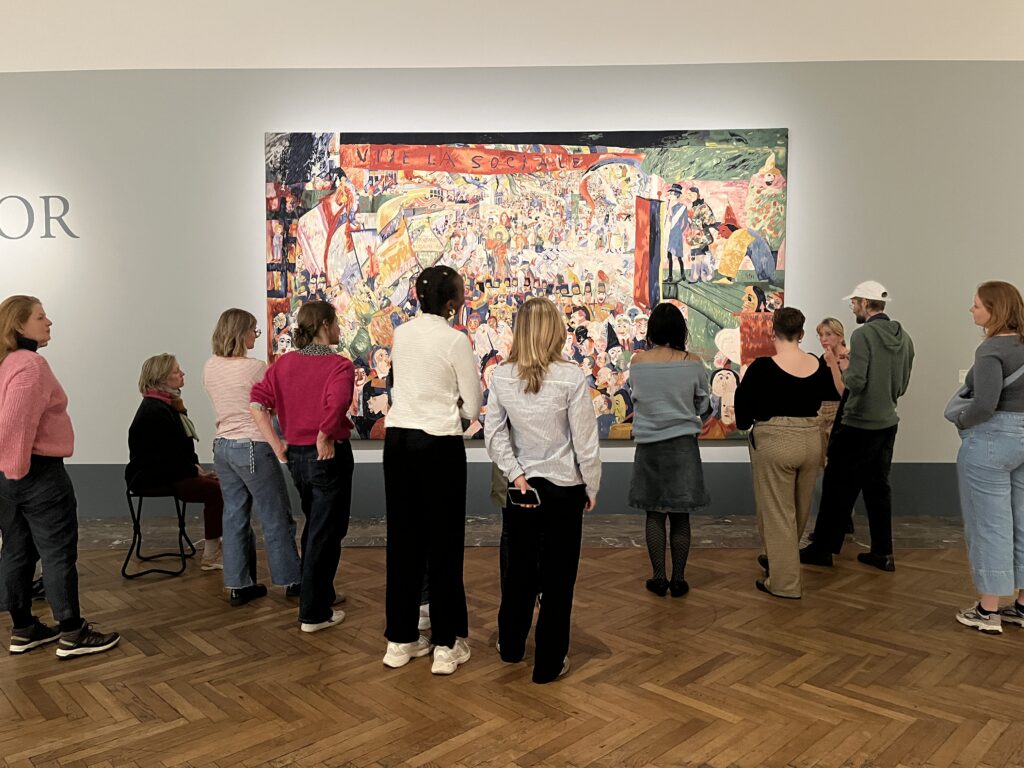
© Photo : Anujin Magnaijargal